

Month: March 2017
Dubai Supreme Council of Energy approves Dubai Green Fund road map at 44th meeting
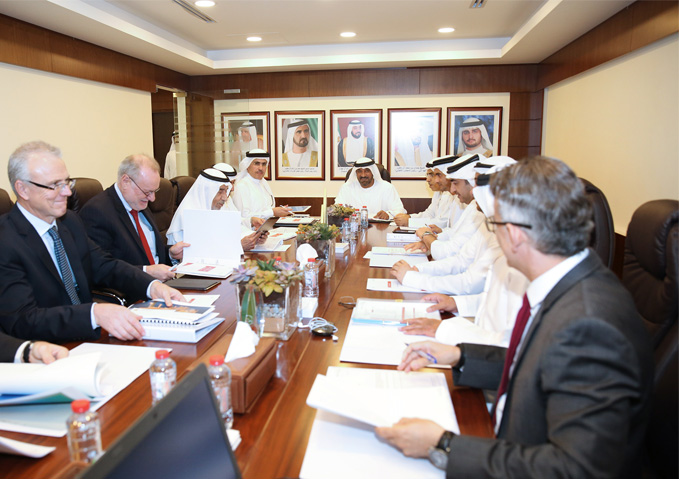
HH Sheikh Ahmed bin Saeed Al Maktoum, Chairman of the Dubai Supreme Council of Energy, chaired the Supreme Council of Energy’s 44th meeting, attended by HE Saeed Mohammed Al Tayer, Vice Chairman of the Supreme Council, to review the progress of major energy projects, initiatives and programmes. These support the UAE Vision 2021 and the Dubai Plan 2021 to create a clean, healthy and sustainable environment, and help Dubai attain a green economy.
The meeting was attended by HE Ahmed Buti Al Muhairbi, Secretary General of the Supreme Council , HE Abdulla bin Kalban, MD & CEO of Emirates Global Aluminium, HE Saif Humaid Al Falasi, CEO of Emirates National Oil Company Ltd, HE Abdullah Abdul Kareem, Director General of the Department of Oil Affairs, Khalid Mohammed Sharif, Assistant Director General for the Health, Safety and Environment Control division at Dubai Municipality, Waleed Salman, Vice Chairman of the Dubai Nuclear Energy Committee, Nasser Abu Shehab, CEO of the Strategy & Corporate Governance Sector at Roads & Transport Authority (RTA), Frederick Chemin, General Manager of Dubai Petroleum, and Simon Cattle, General Manager of Dubai Supply Authority (DUSUP). The Council’s members reviewed the Dubai Green Fund’s road map, mechanism, organisational structure and relevant regulations.
“The Dubai Green Fund was launched by His Highness Sheikh Mohammed bin Rashid Al Maktoum, Vice President and Prime Minister of the UAE and Ruler of Dubai, to encourage investment in green projects and foster Dubai’s position as a global hub for the green economy. Dubai Green Fund is aligned with the Dubai Clean Energy Strategy 2050 for Dubai to have one of the lowest carbon footprints in the world by 2050. The Fund will focus on projects that support the Demand Side Management Strategy, including the installation of photovoltaic panels on the roofs of buildings as part of the ‘Shams Dubai’ initiative. It will also focus on projects related to retrofitting of buildings, enhancing energy and water efficiency, and solar power projects,” said Al Tayer.
“The Fund is the first of its kind in region, and will accelerate the funding mechanism for Dubai’s current projects and programmes, to support Dubai’s ambition to create a green economy. The Fund has allocated AED 100 billion to ensure the necessary funding tools for short- and long-term loans with reduced interest to support the comprehensive economic development of Dubai. The capital of the Fund is being provided by founding investors from Dubai, with additional investment from the private sector, international banks and large investment companies,” added Al Tayer.
“During the meeting, we reviewed suggestions for the RTA to provide more incentives and benefits to encourage the entry of more electric and hybrid vehicles into Dubai’s market. This will support the Dubai Green Mobility initiative, and the Dubai Carbon Abatement Strategy to reduce 16% of carbon emissions by 2021,” said Al Muhairbi.
“We were also briefed on the best practices adopted by EGA to enhance operating efficiency and reduce gas emissions that cause global warming. We also reviewed the existing programmes and projects launched during the last year in Jebel Ali and Al Taweela, with a completion percentage of 41%. This includes retrofitting gas turbines systems, which will save 53% of energy, and developing the mechanism of energy exchange between Al Taweela and Abu Dhabi’s power grid, achieving an energy efficiency of 6%. This plan is part of the EGA’s efforts to adopt new initiatives, strategies and technologies under the Government Accelerators Programme, to reduce the EGA’s carbon emissions by 16% within 100 days,” added Al Muhairbi.
Supreme Council of Energy issues Directive number 1 of 2017 on the establishment and installation of electric vehicle charging stations in Dubai
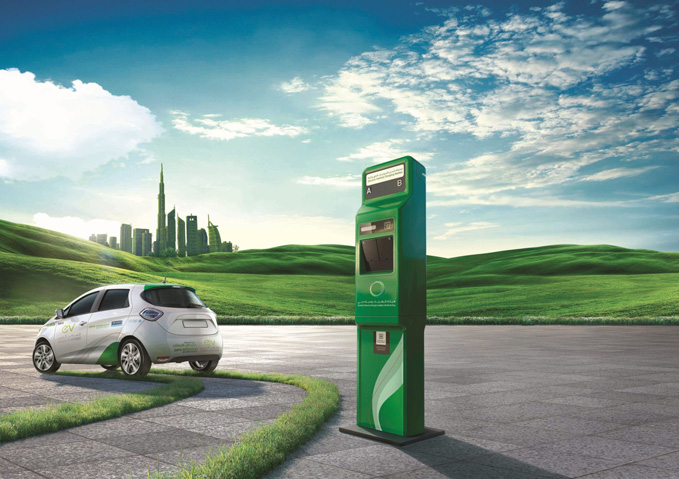
HH Sheikh Ahmed bin Saeed Al Maktoum, Chairman of the Dubai Supreme Council of Energy, has issued Directive number 1 of 2017 on the establishment and installation of electric vehicle charging stations in Dubai. This directive states that all public and private organisations and developers in Dubai must get approvals from Dubai Electricity and Water Authority (DEWA) before establishing, installing, operating or maintaining any electric vehicle charging station. In turn, DEWA will coordinate with Dubai Municipality (DM) and the Roads and Transport Authority (RTA) to ensure that electric vehicle charging stations meet the technical requirements and standards adopted by the relevant authorities.
“The Dubai Supreme Council of Energy has issued Directive number 1 of 2017 to achieve sustainability based on the best global standards and practices that meet DEWA’s technical requirements. This supports the wise vision of His Highness Sheikh Mohammed bin Rashid Al Maktoum, Vice President and Prime Minister of the UAE and Ruler of Dubai, to enhance sustainable development,” said HE Saeed Mohammed Al Tayer, Vice Chairman of the Supreme Council of Energy.
“Under the umbrella of the Supreme Council of Energy, DEWA and the RTA intend to implement the Dubai Green Transport initiative to promote the use of electric and hybrid cars, and reduce carbon emissions caused by land transport. This supports the Dubai Plan 2021, and the Dubai Clean Energy Strategy 2050 to make Dubai the city with the lowest carbon footprint in the world by 2050. This also supports the Dubai Carbon Abatement Strategy to reduce 16% of carbon emissions by 2021,” added Al Tayer.
“The Supreme Council of Energy is working to increase the percentage of electric and hybrid cars in Dubai. It issued Directive number 1 of 2016 to set a target for the government. Therefore, at least 10% of all newly-purchased cars will be electric or hybrid from 2016 to 2020. The proportion of electric and hybrid cars will rise to 2% by 2020, and 10% by 2030,” said HE Ahmad Al Muhairbi, Secretary General of the Supreme Council.
“Electricity tariffs at the charging stations will be clearly defined by the Government of Dubai. DEWA will duly adhere to these tariffs. We urge the public and private sectors to collaborate with each other to achieve these ambitious targets,” added Al Muhairbi.
DEWA has successfully installed 100 electric vehicle charging stations in different areas in Dubai, in cooperation with many stakeholders who helped to identify the most appropriate locations for the stations. Locations include Dubai Airports, Dubai Municipality, the RTA, shopping malls, petrol stations, hotels, parking areas and Developer’s locations.