

Month: September 2020
Dubai Supreme Council of Energy reviews progress made in the Dubai Integrated Water Resource Management Strategy
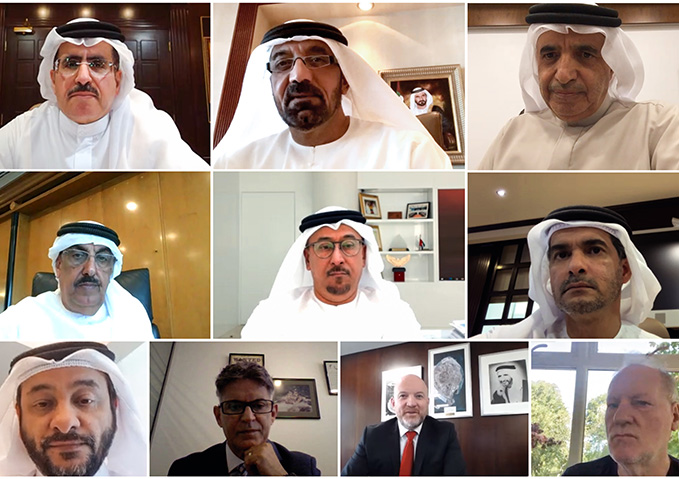
In its 61st meeting chaired by HH Sheikh Ahmed bin Saeed Al Maktoum
HH Sheikh Ahmed bin Saeed Al Maktoum, Chairman of the Dubai Supreme Council of Energy, chaired the 61st meeting of the council, which was organised virtually in the presence of HE Saeed Mohammed Al Tayer, Vice Chairman of the Council.
HE Ahmed Buti Al Muhairbi, Secretary General of the Supreme Council of Energy, attended the meeting along with the board members. These included: HE Dawood Al Hajiri, Director General of Dubai Municipality; HE Abdulla bin Kalban, Managing Director of Emirates Global Aluminium; HE Saif Humaid Al Falasi, CEO of Emirates National Oil Company (ENOC); Waleed Salman, Vice Chairman of the Dubai Nuclear Energy Committee; Nasser Abu Shehab, CEO of the Strategy & Corporate Governance Sector at the Roads & Transport Authority (RTA); and Frederick Chemin, General Manager of Dubai Petroleum.
The meeting discussed several topics, including the Dubai Integrated Water Resource Management Strategy and Dubai’s achievements in reducing carbon emissions in 2019. Dubai ranked first in the C40 Network reports for sustainable cities, with results exceeding the targets set in the Dubai Carbon Abatement Strategy. The carbon emissions have decreased significantly in the past four years in line with the Green Growth Strategy. Members were also briefed on the latest developments in stimulating the circular economy in Dubai’s energy and sustainability sectors.
“During the meeting, we reviewed the progress made in the Dubai Carbon Abatement Strategy. More than 14 million tonnes of emissions were reduced in 2019, a 22% reduction compared to business as usual. Results achieved exceeded the targets set in the Dubai Carbon Abatement Strategy, which aims to reduce carbon emissions by 16% by 2021. We also reviewed work progress in the Dubai Integrated Water Resource Management Strategy. Dubai adopts a comprehensive approach to ensure the sustainability of water resources that focuses on enhancing water resources, rationalising consumption, and using the latest technologies and innovative solutions to reduce water consumption by 30% by 2030. This supports the vision of His Highness Sheikh Mohammed bin Rashid Al Maktoum, Vice President and Prime Minister of the UAE and Ruler of Dubai, to enhance the shift towards a sustainable green economy. This also supports the Dubai Clean Energy Strategy 2050, to provide 75% of Dubai’s total power output from clean energy sources and make Dubai the city with the lowest carbon footprint in the world by 2050,” said Al Tayer.
“We have also discussed the pioneering achievement of Dubai ranking first in the C40 Network reports, which underlines the commitment of the government organisations in Dubai to the vision and directives of the wise leadership to support the sustainable development of the Emirate. The achievement also highlights the coordinated efforts of the government departments and organisations, under the umbrella of the Dubai Supreme Council of Energy, to develop long-term strategic plans to promote sustainable development,” added Al Tayer.
HE Ahmed Buti Al Muhairbi, Secretary General of the Supreme Council of Energy, said that the meeting reviewed the implementation of the ISO 27001 Information Security Management System. Organisations under the Dubai Supreme Council of Energy have adopted the system to enhance the effectiveness of information security management in line with the Dubai Cyber Index.
Dubai Supreme Council of Energy increases procurement targets of electric and hybrid vehicles at government organisations to 20% in 2025 and 30% in 2030
Dubai Supreme Council of Energy issued Directive number 2 for 2020, which includes an update of Green Mobility targets to increase the number of electric and hybrid vehicles in government organisations. According to the new directive, government organisations in Dubai are required to increase the percentage of hybrid and electric vehicles to at least 10% of their overall annual procurement of vehicles until the end of 2024. This percentage will increase to 20% from 2025 to the end of 2029 and 30% from 2030 onwards. This applies to both purchased and leased vehicles.
“In line with the vision and directives of His Highness Sheikh Mohammed bin Rashid Al Maktoum, Vice President and Prime Minister of the UAE and Ruler of Dubai, to accelerate the shift towards a green economy for Dubai to become the city with the lowest carbon footprint in the world by 2050, the Supreme Council of Energy in Dubai launched the Dubai Green Mobility initiative in 2015 to encourage the use of sustainable transportation, such as hybrid or electric vehicles, to help reduce carbon emissions in the transport sector, which is the second-highest contributor of greenhouse gas emissions in Dubai. The Council’s new directive to increase the percentage of electric and hybrid vehicles in government organisations will make them role models for other organisations in increasing the use of environmentally-friendly vehicles. This supports the Smart Dubai initiative, which aims to make Dubai the smartest and happiest city in the world; and the Dubai Carbon Abatement Strategy to reduce the emissions in the transport sector,” said HE Saeed Mohammed Al Tayer, Vice Chairman of the Supreme Council of Energy in Dubai.
HE Ahmed Buti Al Muhairbi, Secretary-General of the Supreme Council of Energy in Dubai, said that the new directive builds on Directive number 1 for 2016, which set a target for government organisations to maintain no less than 2% of hybrid and electric vehicles in their overall annual procurement of vehicles from 2016 until 2020, and to reach 10% by 2030. In light of the success achieved by the Dubai Green Mobility initiative since its launch, as the procurement percentage of hybrid and electric vehicles (EV) reached 8% by the end of 2019, the Supreme Council of Energy in Dubai has raised the percentage to 20% starting from 2025 until the end of 2029, and 30% from 2030 onwards.
DEWA provides more than 240 Green Charger stations across Dubai. Non-commercial EV owners who are registered with the Green Charger initiative can charge their vehicles for free until 31 December 2021. This is exclusive to DEWA’s public charging stations and does not apply to home chargers. Commercially registered users such as government, semi-government, and private organisations are being charged a tariff of 29 fils per kilowatt hour.