

Month: December 2020
Dubai Supreme Council of Energy and Clean Energy Business Council establish dialogue on future of mobility in Dubai
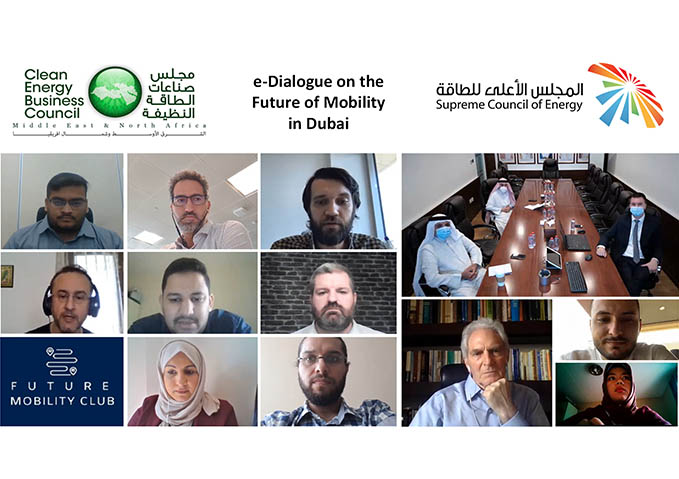
The Dubai Supreme Council of Energy hosted an online meeting with industry leaders represented by the Clean Energy Business Council (CEBC) on the future of mobility in Dubai.
HE Ahmad Buti al Muhairbi, Secretary General of The Dubai Supreme Council of Energy, and Dr Nasser Saidi, Chairman of the CEBC, led the meeting, along with technical teams from both organisations and industry representatives.
In August, the Dubai Supreme Council of Energy issued Directive Number 2 of 2020, which included an update of the Dubai Green Mobility Strategy 2030 to increase the number of electric and hybrid vehicles in government organisations. According to the new directive, the public sector in Dubai must increase its percentage of hybrid and electric vehicles to at least 10% of their overall annual procurement of vehicles up to the end of 2024. This percentage will increase to 20% from 2025 to the end of 2029 and 30% from 2030 onwards. This applies to both purchased and leased vehicles.
To support the transition of the automotive industry towards green mobility and the recent initiatives taking places in the UAE, the Future Mobility Club (FMC) has been created under the umbrella of the Clean Energy Business Council (CEBC), with an initial focus on electric vehicles. FMC is supporting the growth of electric vehicle market, green job development and is raising awareness about this industry, as well as interacting with key public-private stakeholders to establish partnerships and collaborations.
During the meeting, participants exchanged their ideas and plans for green mobility future, discussed multiple challenges ahead and outlined the areas of future collaboration which are expected to benefit all stakeholders in the market, including owners of both hybrid and electric vehicles.
Dubai Supreme Council of Energy directs district cooling companies to reduce bills
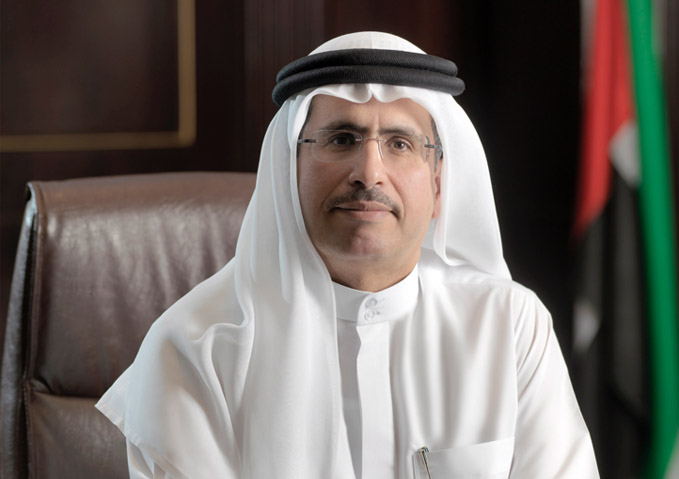
In line with the directives of HH Sheikh Mohammed bin Rashid Al Maktoum, Vice President and Prime Minister of the UAE and Ruler of Dubai, to increase the share of renewable and clean energy in Dubai’s energy mix, and following the decision issued by HH Sheikh Ahmed bin Saeed Al Maktoum, Chairman of the Dubai Supreme Council of Energy, to reduce the fuel surcharge for electricity from 6.5 to 5 fils for kilowatt hour and for water from 0.6 to 0.4 fils for Imperial Gallon, HH Sheikh Ahmed bin Saeed Al Maktoum has directed all district cooling companies to fully implement this reduction in their customers’ bills and to take the necessary measures in this regard.
The new decision reflects the Dubai Supreme Council of Energy’s commitment to enhancing the competitiveness and economic sustainability of Dubai in line with the objectives of the Dubai Clean Energy Strategy 2050, which aims to transform Dubai into a global hub for clean energy and green economy and make Dubai the city with the lowest carbon footprint in the world by 2050.
“The Dubai Supreme Council of Energy’s decision to reduce the bills for district cooling companies’ customers supports the directives of His Highness Sheikh Mohammed bin Rashid Al Maktoum, Vice President Prime Minister of the UAE and Ruler of Dubai, to ensure a decent life for the residents of Dubai. The decision also supports the Demand Side Management Strategy 2030, which the Council launched and aims to reduce demand for electricity and water by 30% by 2030 in line with its efforts to make Dubai a leading example in the efficient management of electricity and water demand,” said HE Saeed Mohammed Al Tayer, Vice Chairman of the Dubai Supreme Council of Energy.
“District cooling supports the objectives of the Carbon Abatement Strategy to reduce carbon emissions, which achieved great success in 2019. More than 14 million tonnes of emissions were reduced last year, a 22% reduction compared to business as usual. Results achieved exceeded the targets set in the Dubai Carbon Abatement Strategy, which aims to reduce carbon emissions by 16% by 2021,” added Al Tayer.