

Month: June 2021
Dubai Future Council on Energy holds its seventh meeting
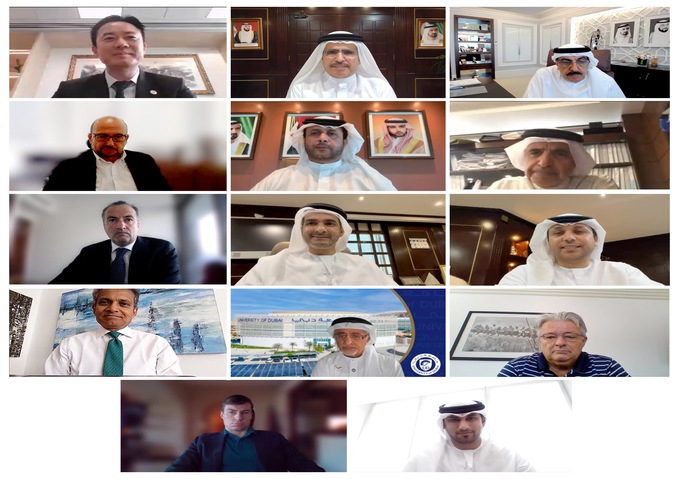
HE Saeed Mohammed Al Tayer, Chairman of the Dubai Future Council on Energy chaired the seventh council’s meeting which was organised virtually.
Under the directives of His Highness Sheikh Mohammed bin Rashid Al Maktoum, Vice President, Prime Minister of the UAE and Ruler of Dubai, His Highness Sheikh Hamdan bin Mohammed bin Rashid Al Maktoum, Crown Prince of Dubai, Chairman of the Board of Trustees of Dubai Future Foundation launched the Dubai Future Councils.
The main objective of these Councils is to support the shaping of the future of Dubai in key sectors.
Dubai Future Council on Energy’s mandate is to explore the future of energy, and identify opportunities to transform Dubai into a sustainable ecosystem powered by clean energy.
During the meeting, HE Saeed Mohammed Al Tayer welcomed the new members who joined Dubai Future Council on Energy and all attendees of the first meeting for this year.
“Dubai’s main energy direction is in line with the wise leadership directives. It includes expanding the use of clean energy and employing digital transformation, smart grids, the tools of the Fourth Industrial Revolution and disruptive technologies, for their impact on the energy and water sectors,” said Al Tayer.
Al Tayer highlighted Dubai’s pioneering and innovative initiatives and projects. These include developing renewable energy projects and supporting research and development in line with Dubai Clean Energy Strategy 2050, which aims to provide 75% of Dubai’s total power capacity from clean energy sources by 2050.
The meeting included a presentation by Dr. Saif Al Mehairi, VP R&D at Dubai Electricity and Water Authority (DEWA) on the green hydrogen project which is one of the initiatives of DEWA that support the objectives of Dubai Future council on Energy.
DEWA has set up the Green Hydrogen facility at the Mohammed bin Rashid Al Maktoum Solar Park in Dubai in line with the vision of the UAE’s wise leadership to anticipate and shape the future towards a green economy. This pilot project is the first of its kind in the Middle East and North Africa to produce eco-friendly hydrogen using renewable energy.
Dubai Future Councils are supervised by Dubai Future Foundation and aim to look into the future of Dubai’s vital key sectors. The Councils include an elite of experts and specialists specialized in exploring the future, and public and private sectors’ leaders both locally and globally.
Dubai Supreme Council of Energy announces savings of 5.4 TWh of electricity and 9.9 billion gallons of water in its 2020 report on DSM Strategy
In its annual report on the results of the Dubai Demand Side Management Strategy 2030, the Dubai Supreme Council of Energy has announced that Dubai achieved savings of 11.8% in electricity consumption and 7.9% in water in 2020, compared to normal consumption. This is equivalent to saving 5.4 terawatt hours (TWh) of electricity and 9.9 billion imperial gallons of water. These are equivalent to reducing 11.5 million metric tonnes of CO2 emissions or taking 1.2 million vehicles out of Dubai roads for two full years.
According to the report, the per capita level in Dubai continues to witness a consistent decrease in consumption, with an overall reduction of 23% for electricity and 21% for water since 2010. This reflects the strong performance and progress achieved in the Demand Side Management Strategy 2030 over the past years.
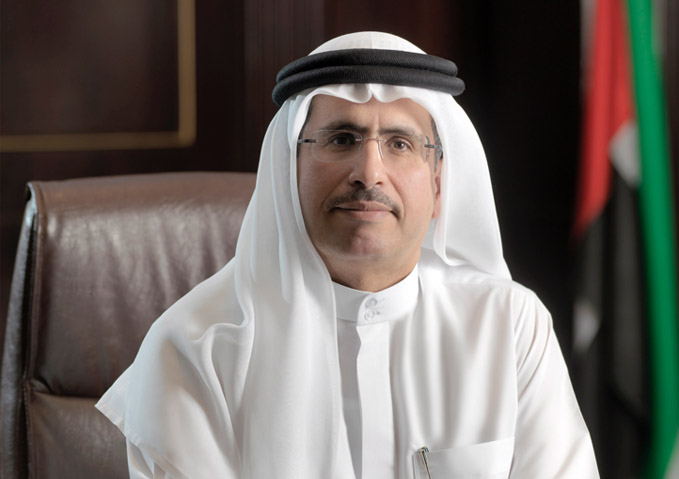
“In line with the vision of His Highness Sheikh Mohammed bin Rashid Al Maktoum, Vice President and Prime Minister of the UAE and Ruler of Dubai, to enhance the shift towards a green economy, we move forward with implementing the Dubai Clean Energy Strategy 2050 to provide 75% of Dubai’s total power capacity from clean energy sources by 2050; and the Demand Side Management Strategy 2030 to reduce 30% of electricity and water demand by 2030. This contributes to making Dubai a globally leading hub in demand-side management. These significant savings were achieved through enhancing collaboration and partnerships with key players in the energy and water sectors from pioneering public and private entities,” said HE Saeed Mohammed Al Tayer, Vice Chairman of the Dubai Supreme Council of Energy.
Al Tayer said that the Strategy aims to implement seven mechanisms, namely Policies & Regulations; Data & Measurement and Verification (M&V); Government Support & Leadership; Communication & Engagement; Financing; DEWA Collaboration and Technologies & Innovation. The Strategy also aims at aligning with the scope of the respective charters, roadmaps and targets for each of the Demand Side Management Programmes and Implementing Mechanisms as per the Dubai Demand Side Management Strategy 2030 Update and monitoring and taking action to achieve or exceed the 30% savings target by 2030.
“The Demand Side Management Strategy includes 11 programmes including Green Building Regulations; Building Retrofits; Outdoor Lighting; Efficient Cooling; Energy efficiency standards and labels from the Emirates Authority for Standardization and Metrology; Consumer Behaviour; Shams Dubai; Recycled and Groundwater Demand Management; Efficient Mobility and Smart Charging; and Fuel and Engine Efficiency,” said HE Ahmed Buti Al Muhairbi, Secretary-General of the Dubai Supreme Council of Energy.
Dubai’s electricity capacity reaches 12,900 MW, increasing tenfold compared to the 1990s
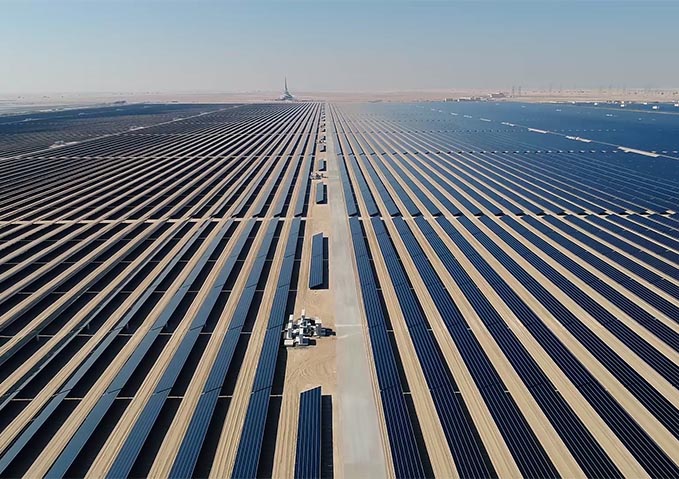
Dubai Electricity and Water Authority (DEWA) has announced that its installed capacity has reached 12,900 megawatts (MW) of electricity and 490 million imperial gallons of desalinated water per day (MIGD) thanks to its state-of-the-art infrastructure, innovation and planning. This is in line with DEWA’s efforts to keep pace with increasing demand for electricity and water, as well as Dubai’s ambitious urban and economic plans.
In comparison with the 1990s, which witnessed the merger of the Dubai Electricity Company and the Dubai Water Department and the establishment of DEWA, the installed capacity of electricity was about 1,200 MW and water was 60 MIGD. This means DEWA’s production capacity today has increased more than 10 times for electricity and more than 8 times for water. It is expected that the installed production capacity of electricity will increase next July to 13,200 megawatts, with the commissioning of the 300MW first project of the 900MW 5th phase of the Mohammed bin Rashid Al Maktoum Solar Park, using photovoltaic solar panels based on the Independent Power Producer (IPP) model.
“We work in line with the vision and directives of His Highness Sheikh Mohammed bin Rashid Al Maktoum, Vice President and Prime Minister of the UAE and Ruler of Dubai, to provide an advanced and integrated infrastructure for electricity and water according to the highest standards of reliability, availability, and efficiency. This meets the growing demand and keeps pace with Dubai’s future sustainable development needs through specific and reliable planning processes that are based on the latest foresight tools. Electricity infrastructure expansion plans are developed based on demand forecast in Dubai until 2030, considering the demographic and economic growth in the Emirate. Despite the challenges posed by the Covid-19 pandemic on the global economy, Dubai continues to grow and develop; consolidating its position as an attractive environment for global investments,” said HE Saeed Mohammed Al Tayer, MD & CEO of DEWA.
“In line with DEWA’s vision to become a globally leading sustainable innovative corporation, we work to provide state-of-the-art infrastructure for facilities management and services through smart and integrated systems that use disruptive technologies and Fourth Industrial Revolution applications. These include Artificial Intelligence (AI), Unmanned Aerial Vehicles (UAVs), Blockchain, Energy Storage, and Internet of Things (IoT), among others.
DEWA has major clean and renewable energy projects to achieve Dubai Clean Energy Strategy 2050, aiming to provide 75% of Dubai’s total power capacity from clean energy sources by 2050. These include the Mohammed bin Rashid Al Maktoum Solar Park, which is the largest single-site solar park in the world, with a planned capacity of 5,000 MW by 2030. The Smart Grid is a key component of DEWA’s strategy to develop an advanced infrastructure. The Smart Grid includes programmes with investments of up to AED 7 billion that will be completed in the short, medium, and long-term until 2035,” added Al Tayer.
DEWA achieved a new world record in reducing Customer Minutes Lost (CML) for electricity per year. DEWA recorded 1.66 minutes in Dubai, compared to around 15 minutes recorded by leading electricity companies in the European Union. The UAE, represented by DEWA, has maintained its first global ranking, for the third consecutive year, with scores of 100% in all Getting Electricity indicators in the World Bank’s Doing Business 2020 report. The report measures the ease of doing business in 190 economies around the world.