

Month: August 2016
Dubai to purchase new government electric and hybrid vehicles
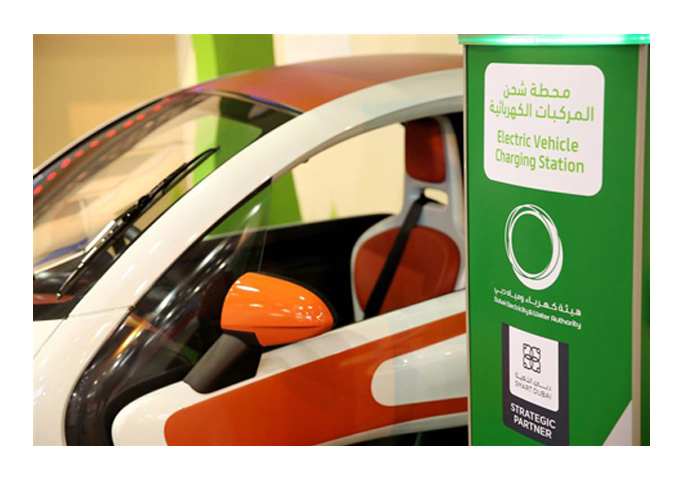
Cars to be ordered in the next few years by selected Dubai government bodies maintaining huge transportation fleets will be 10% electric and hybrid vehicles in the next few years, as per the new Dubai Green Mobility Initiative Committee. Reporting to the Dubai Supreme Council of Energy, a Dubai Green Mobility Initiative Committee was formed with an Executive and a Technical Committee in charge of achieving the Committee’s set targets to reduce carbon emissions and greenhouse gases in Dubai within the next four years.
“In adherence with the Smart Dubai initiative launched by HH Sheikh Mohammed bin Rashid Al Maktoum, Vice President and Prime Minister of the UAE and Ruler of Dubai, to make Dubai the smartest and happiest city in the world, and to support the Dubai Plan 2020 and the Dubai Clean Energy Strategy 2050, Dubai Electricity and Water Authority (DEWA)’s Green Charger initiative aims to establish electric vehicle charging stations across Dubai, with 100 charging stations having already been installed since 2015. We will work to increase the percentage of hybrid cars in the Emirate, and contribute towards a 16% reduction in carbon emissions by 2020. Reductions are expected to continue in the near future,” said HE Saeed Mohammed Al Tayer, MD & CEO of DEWA.
Al Tayer noted that the Dubai Green Mobility initiative’s executive and technical committees comprise energy and environmental experts from DEWA, Roads and Transport Authority (RTA), Dubai Police, Dubai Municipality, Dubai Airports, Dubai Civil Defence, Dubai Supreme Council of Energy (DSCE), and Emirates Authority for Standardisation and Metrology (ESMA). “10% of all newly produced vehicles will comprise electric and hybrid cars. Dubai is taking great steps towards achieving this goal. Dubai roads will witness major changes in coming years. The market for hybrid and electric vehicles will attract more electric and hybrid car manufacturers, and will encourage all citizens and residence to make use of environmentally-friendly vehicles,” added Al Tayer.
“The new committees are working on new ideas to create government incentives to encourage people to buy electric cars instead of traditional petrol-powered vehicles. Giving special perks to electric-car owners could ensure that the Emirate has cleaner air and transforms to a greener economy. This is a new boost. We are speaking with the involved Dubai Government entities to give incentives to the owners of the EVs to encourage them to make the switch,” continued Al Tayer.
“Dubai is exerting all efforts to protect the environment, which involves the adoption of new technologies that have been designed to facilitate the use of electric cars on a daily basis, on crowded roads and streets in Dubai. Current fast electric chargers in the petrol stations, for example, can take up to 20 minutes and about 6-8 hours for lower-output home chargers that plug into the vehicle from the home’s electric system, thus the importance of new technologies arise.
This is expected to result in a huge step towards developing a fast charging processes, including advanced technology that charges a vehicle while it is parked and connected to wireless chargers, without the need to plug in cumbersome cords or wires. The car is stopped on a map point that has the advanced technology to charge the battery of electric cars without using wires. We are currently studying the ability to bring this technology to Dubai,” added Al Tayer.
Dubai has implemented 100 electric-car charging stations with more promised in the months ahead, depending on the uptake of the vehicles and requests from concerned stakeholders. Some government bodies such as DEWA have already purchased a number of electric cars for its fleet for everyday use. DEWA was the first government entity in Dubai to add 100% electric vehicles to its fleet by adopting 13 electric vehicles in 2015-2016. Electric vehicle owners can now sign-up to obtain an EV Green Charger Card to be used at charging points that are spread around the Emirate, helping make Dubai the happiest and smartest city in the world.
Dubai Supreme Council of Energy joins UN’s BEA partnership to double rate of building energy efficiency by 2030
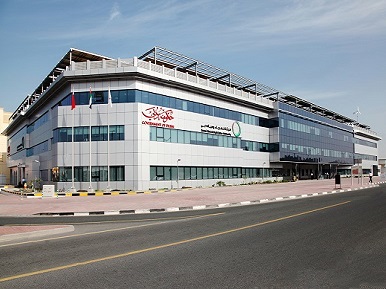
Dubai Supreme Council of Energy has joined the Building Efficiency Accelerator (BEA) partnership, launched by the United Nations (UN), to double the rate of energy efficiency by 2030. Building efficiency policies can result in 25-50% reductions in energy demand from both new and existing buildings, saving money and reducing pollution.
“DEWA adopts a clear vision based on sustainability, and develops plans and objectives according to the highest standards of efficiency. Through the Dubai Clean Energy Strategy 2050, we are working to diversify Dubai’s energy mix and increase our use of clean energy sources. We work to enhance innovation and creativity in renewable energy, sustainability, and the environment, while promoting energy efficiency as the key to reducing the carbon footprint of each individual, transforming Dubai into the city with the lowest carbon footprint on Earth,” said HE Saeed Mohammed Al Tayer, Vice Chairman of the Dubai Supreme Council of Energy.
“Dubai is one of 12 new cities to join the BEA programme, making a total of 23 cities. This reflects our commitment to a healthier, more productive, and greener future. By joining BEA, Dubai now has access to a global network of 30 businesses, government organisations, and technical experts who specialise in improving building energy efficiency. BEA supports local collaboration and planning to improve buildings, lower energy costs and make people more comfortable and productive at home, and in the workplace,” added Al Tayer.
“According to a recent report released by the International Renewable Energy Agency (IRENA), the global rationalisation of consumption and management of energy demand has received a total annual investment of USD385 billion. This investment is expected to increase to USD5.8 trillion by 2030, with USD125 billion being spent on buildings alone by 2020, as buildings are one of the largest consumers of energy,” said Al Tayer.
Dubai is committed to speeding up the implementation of BEA, to reduce emissions caused by the building sector, while monitoring its progress. Measures will include updating policies and building codes, developing more creative techniques to enhance efficiency, rehabilitation of existing buildings such as hospitals, schools, and government buildings, and setting regulations for energy use within buildings. The building sector accounts for about one-third of global energy use and one-quarter of greenhouse gas (GHG) emissions. Building efficiency is one of the most cost-effective ways a city can reduce its GHG while benefiting the economy. For every USD1 invested in efficiency, USD2 are saved in new electricity generation and distribution costs.
“The BEA is an important programme for Dubai to achieve the Dubai Integrated Energy Strategy 2030 to reduce 30% of energy demand by 2030 and the demand side management programmes including building retrofit, , particularly in energy security, and renewable energy,” said HE Ahmed Buti Al Muhairbi, Secretary General of the Dubai Supreme Council of Energy.
“We are pleased to join BEA, which will help to foster a culture of efficiency in existing and new buildings through best practices and learning from other city experiences to ensure a sustainable environment for future generations,” added Al Muhairbi.
“I am delighted to announce that 12 more cities and states are prioritising building efficiency as a way to unlock a better, more sustainable future. The BEA partnership brings technical experts together with local governments to improve policies, deliver more efficient buildings and technologies, and transform cities,” said Jennifer Layke, Director of the Building Efficiency Initiative at the WRI Ross Center for Sustainable Cities.
“These cities and states have shown a commitment toward a more efficient future that deserves to be applauded. Most of them are in countries we have identified as key to unlocking the energy transition and championing more efficient and productive ways of using energy. Reducing the energy use and demand of buildings is the most cost-effective way for cities to reach a low-carbon future – and Sustainable Energy for All stands ready to help them unlock the investment needed to go even further,” said Sandrine Dixson-Declève, Chief Partnership Officer of Sustainable Energy for All.
New cities that have joined the BEA programme include Dubai, Belgrade in Serbia, Bogotá in Colombia, Eskişehir in Turkey, Medellin in Colombia, Porto Alegre in Brazil, Riga in Latvia, Santa Rosa in the Philippines, Tshwane in South Africa; and Coimbatore, Rajkot and Shimla in India.